
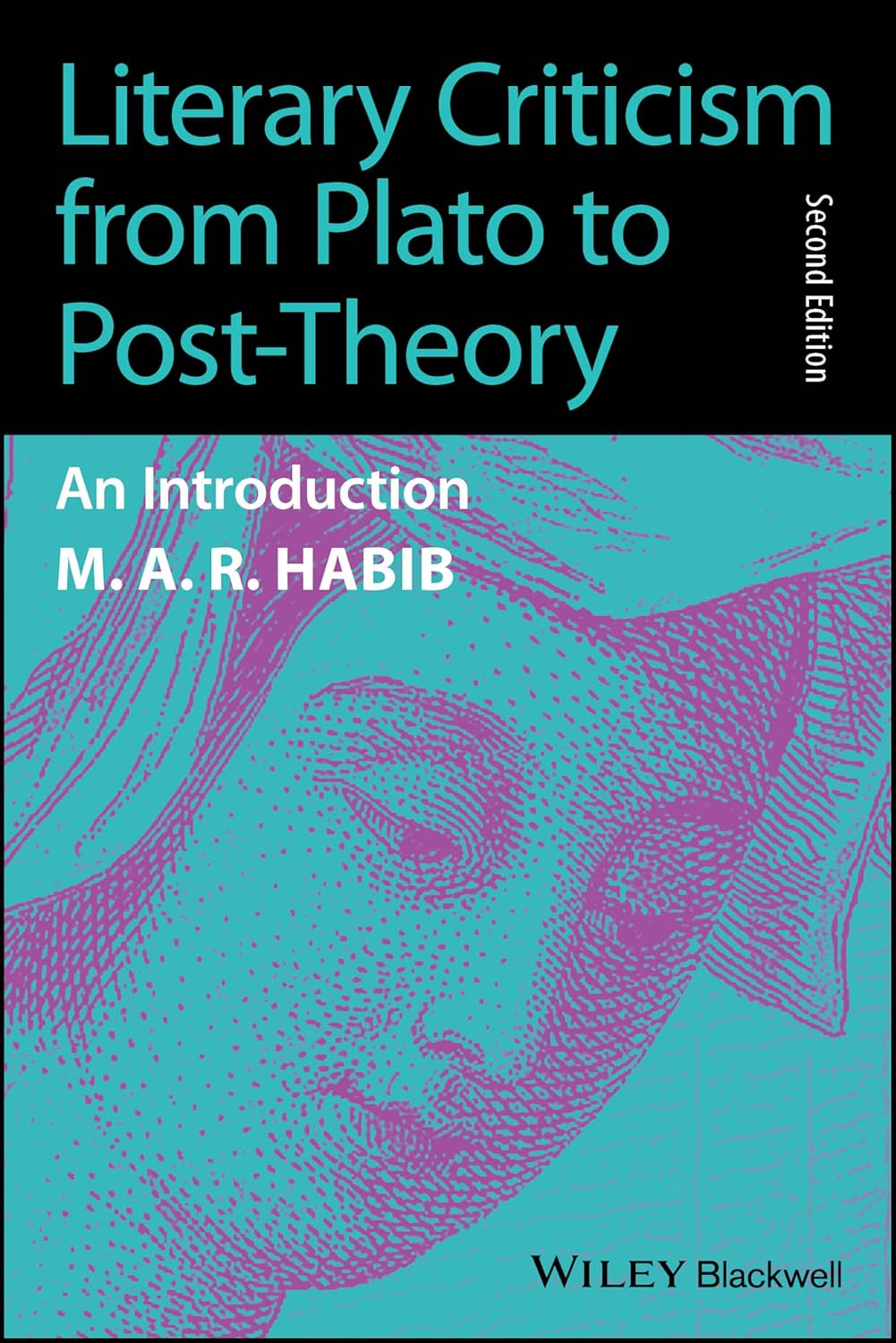
Literary Criticism from Plato to Post-Theory: An Introduction. Wiley-Blackwell, 2025. This is a much updated second edition of a previous book, with five new chapters. It remains the most comprehensive introduction to literary criticism and theory.
Reviews:
Habib has an unrivaled ability to synthesize complex doctrines in clear and lively prose, hence this perfectly balanced introduction to literary criticism – a must-read for all students in the humanities.
―Jean-Michel Rabaté, University of Pennsylvania, American Academy of Arts and Sciences
Literary Criticism from Plato to Post-Theory accomplishes the nearly impossible in being both concise and exhaustive; it works as a book of reference, a history of philosophy, and a lucid scholarly argument for the value of literature. Habib traces the history of literary criticism through six major periods, whose features are described in succinct yet nuanced detail with illuminating commentary on chief philosophers, theorists, and poets. In every chapter, but most urgently in the last one addressing our present times, Habib’s careful analysis of material contexts, philosophical concepts, and literary texts confirms that all new theories have long histories, that no discovery is without antecedents, that judgments, tastes, and values are never autonomous. Clear and wonderfully readable, Habib’s book is as engrossing as it is convincing.
―Harold Schweizer, author of On Waiting and On Lingering and Literature
The Qur’an: A Verse Translation (in collaboration with Bruce Lawrence) (Liveright/W.W. Norton, 2024).
Reviews:
“[In this translation] the beauty and power of the Qur’an emerge in English as never before.”
― Michael Sells, University of Chicago, author of Approaching the Qur’an
“The Qur’an: A Verse Translation is truly a monumental achievement . . . capturing the poetical and rhythmic beauty of the Qur’an through the richness of the English language.”
―Shamim Miah
“This new translation . . . deserves to be recognized as the best available version of the Qur’an in English.”
―Carl Ernst, University of North Carolina, author of How to Read the Qur’an
“An extraordinary achievement, it will be my go-to translation from now on.”
―Ziauddin Sardar, author of Reading the Qur’an
“This must be the most beautiful translation of the Qur’an ever . . . [B]oth impressively poetic and accurate.”
―Dr. Ahmad Elezabi, University of Al-Azhar, Cairo, Egypt
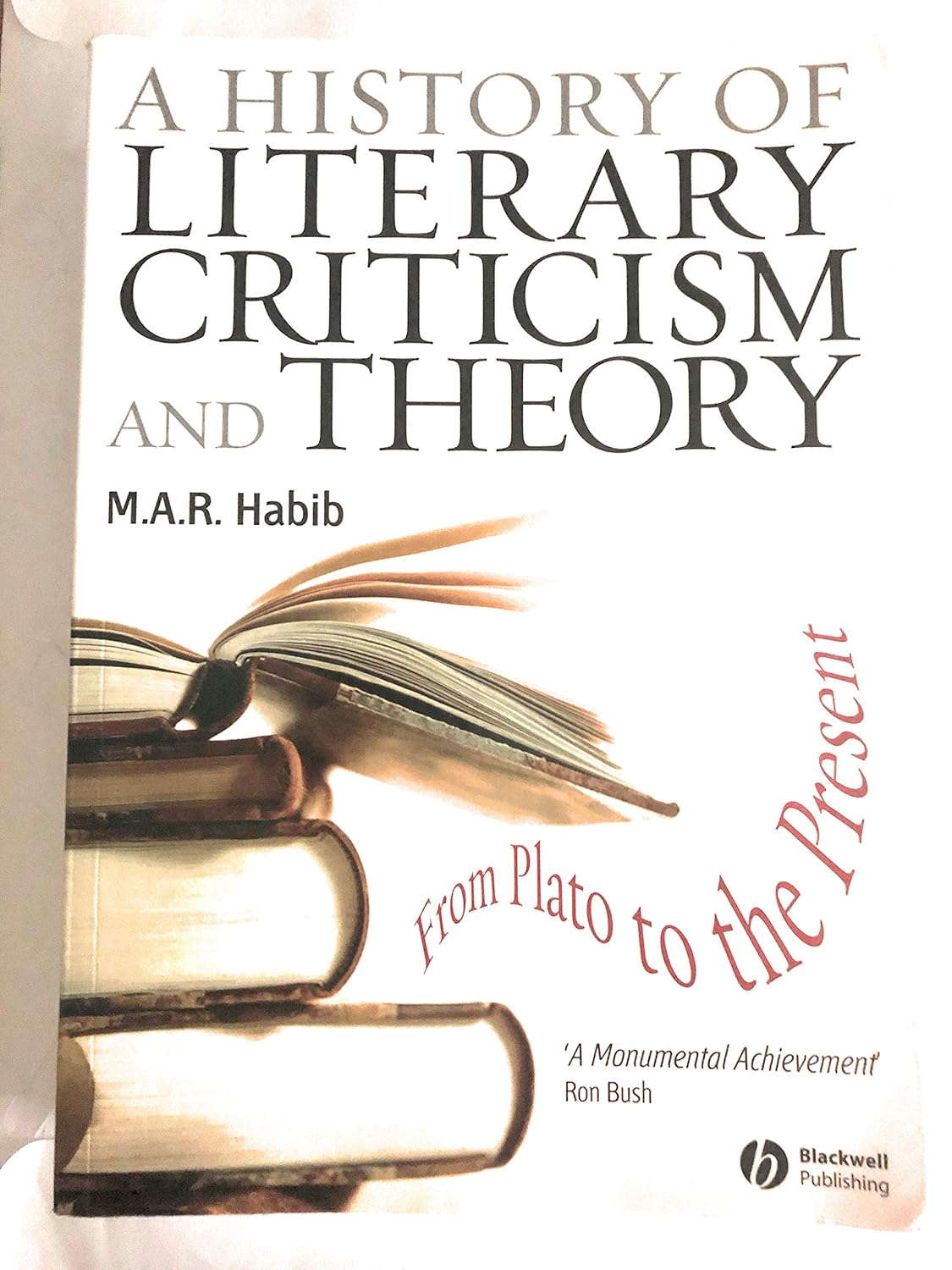
A History of Literary Criticism: From Plato to the Present (2005) is 838 pages long and is by far the most comprehensive treatment of its subject in modern times.
Reviews:
“[A] magnificently comprehensive history of literary criticism. Authoritative, formidable, generous and compassionate … Habib’s achievements are many, but two stand out. The first is the putting of theory into historical perspective and the second is to make connections between criticism and philosophy.”
―Times Higher Education Supplement
“Best single-volume introduction to Western literary theory … .With its admirably clear explanation of concepts and terminology, [it] admirably fulfils the promise of its title.”
―Literary Research Guide“
“Philosophically sophisticated and full of fascinating connections and distinctions …a monumental achievement.”
―Ron Bush, University of Oxford
“Rafey Habib’s History of Literary Criticism, with its substantial grounding in classical texts and its excellent coverage of contemporary criticism and theory, is certain to be as highly regarded as Wimsatt and Brooks’ Literary Criticism: A Short History. Habib’s lucidity and wit will also make his book highly teachable.”
―Michael Payne, Bucknell University
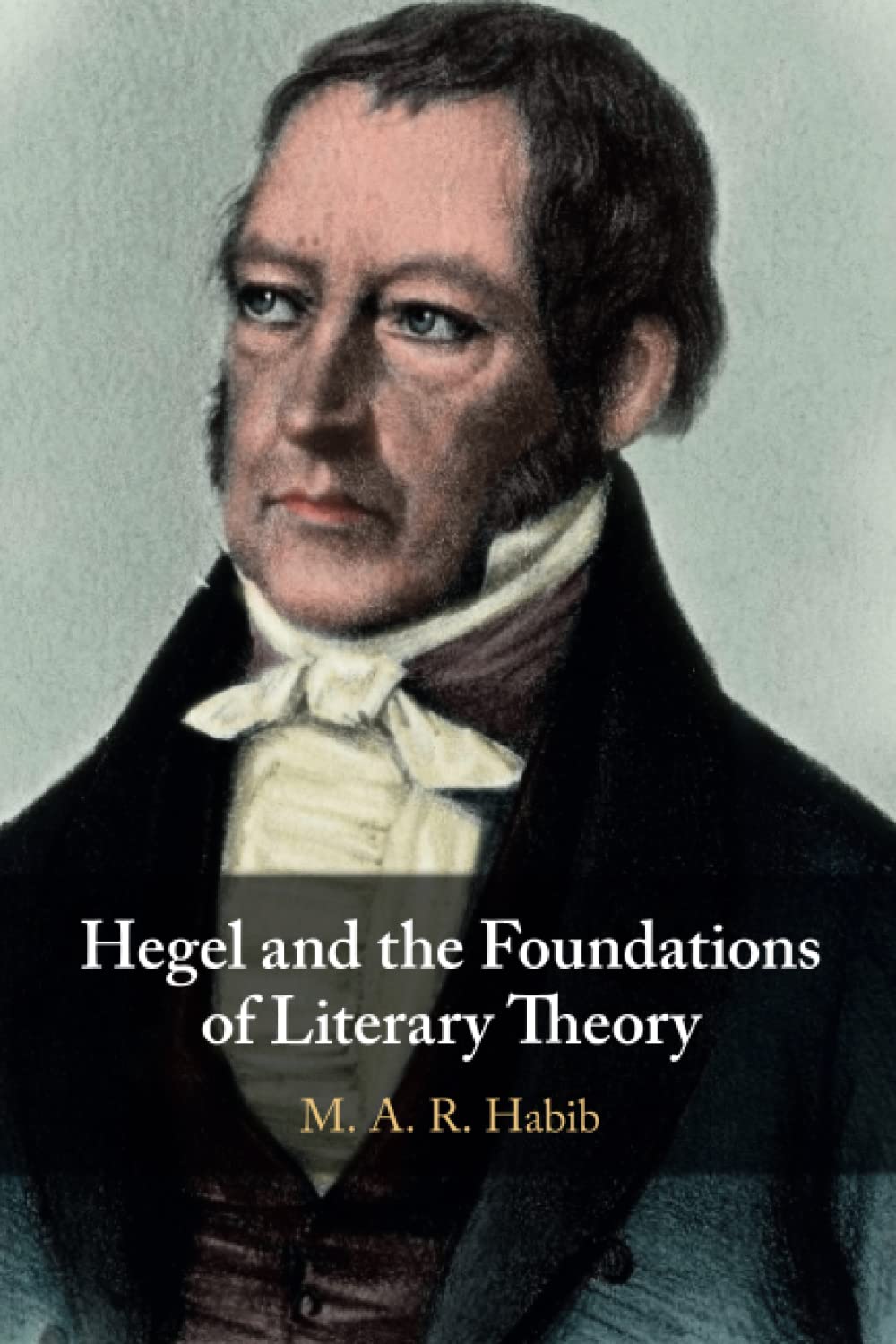
Hegel and the Foundations of Literary Theory (Cambridge University Press, 2019).
Reviews:
‘This is a wonderful and magisterial study which covers a vast range of philosophical material, both ancient and modern, and does so with enormous erudition, precision, force and clarity … brilliantly expounded via wonderfully complex readings and argumentation. What the study thus achieves is nothing less than a complete re-visioning of modern literary theory …’
―John Schad, Lancaster University
‘M. A. R. Habib proposes in this immensely important and lucidly argued book Hegel’s dialectical method as foundational for our moral and social conscience and as an indispensable critical tool for assessment of the deficiencies of modernity. The book presents Hegel’s dialectics as a form of subversive thinking that anticipates contemporary literary theory by establishing identity as a process rather than as an essence, thus enabling a critique of the internal contradictions both of bourgeois thought and capitalist ideology. Hegel and the Foundations of Literary Theory is wonderfully readable. It elucidates both contemporary theory and Hegel’s philosophy, and it is entirely convincing in its claim that liberal humanism is unthinkable without Hegel.’
―Harold Schweizer, Bucknell University, Pennsylvania
Hegel and Empire: From Postcolonialism to Globalism (Palgrave, 2017).
Reviews:
“Hegel and Empire is well organized, clearly written, and thoughtfully reasoned. Together with his thorough command of the history of philosophy, Habib’s capacious knowledge of anti- and postcolonial theories and literatures beggars the interdisciplinary imagination. Alongside recent works such as George Ciccariello-Maher’s Decolonizing Dialectics , Habib’s Hegel and Empire is obligatory reading for those of us ‘working toward a more global vision’ … .”
―Garry Bertholf, The Philosophical Quarterly, June 21, 2019
“Habib’s Hegel and Empire is unique in being both highly ambitious in its far-reaching scope and at the same time painstakingly precise in all its details. I sense that it will soon emerge as a classic in the field.”
―Aakash Singh Rathore, author of Hegel’s India: A Reinterpretation, with Texts, 2017.
Shades of Islam: Poems for a New Century. Leicester, UK: Kube Publishing,
- This is a book of my own poetry.
Reviews:
“These poems offer a window onto the sensibility of a modern American Muslim, with unflinching honesty and richly informed compassion. The great humanistic tradition of poetry known in Arabic and other Eastern languages here finds a contemporary English voice, which will be recognized like a lost friend who has unaccountably been rediscovered.”
―Carl W. Ernst, William R. Kenan Junior Distinguished Professor of Religious Studies, UNC-Chapel Hill
Modern Literary Criticism and Theory: A History. Blackwell, 2007.
“Lucid, wide-ranging, erudite and packed with insights, Rafey Habib’s survey of modern criticism and theory has something for both the tenderfoot and the old-timer. Students everywhere will find it indispensable.”
―Terry Eagleton, University of Manchester
“Those who want to know where literary critics may be going should have this.”
―Times Higher Education Supplement
The Cambridge History of Literary Criticism: Vol. VI: the Nineteenth Century. Cambridge University Press, 2013.
Reviews:
“… a model of how to present sharp, original thinking without scanting the responsibility to provide a usable map … This volume provides a series of helpful starting points for exploring the range of thinking about literature that [the] extraordinary growth in critical writing helped to stimulate.”
―Stefan Collini, Modern Philology
‘… this volume clearly serves its purpose as a landmark for the multiple theoretical and practical issues that shaped nineteenth-century criticism within various national contexts …’
―Usha Wilbers, English Studies
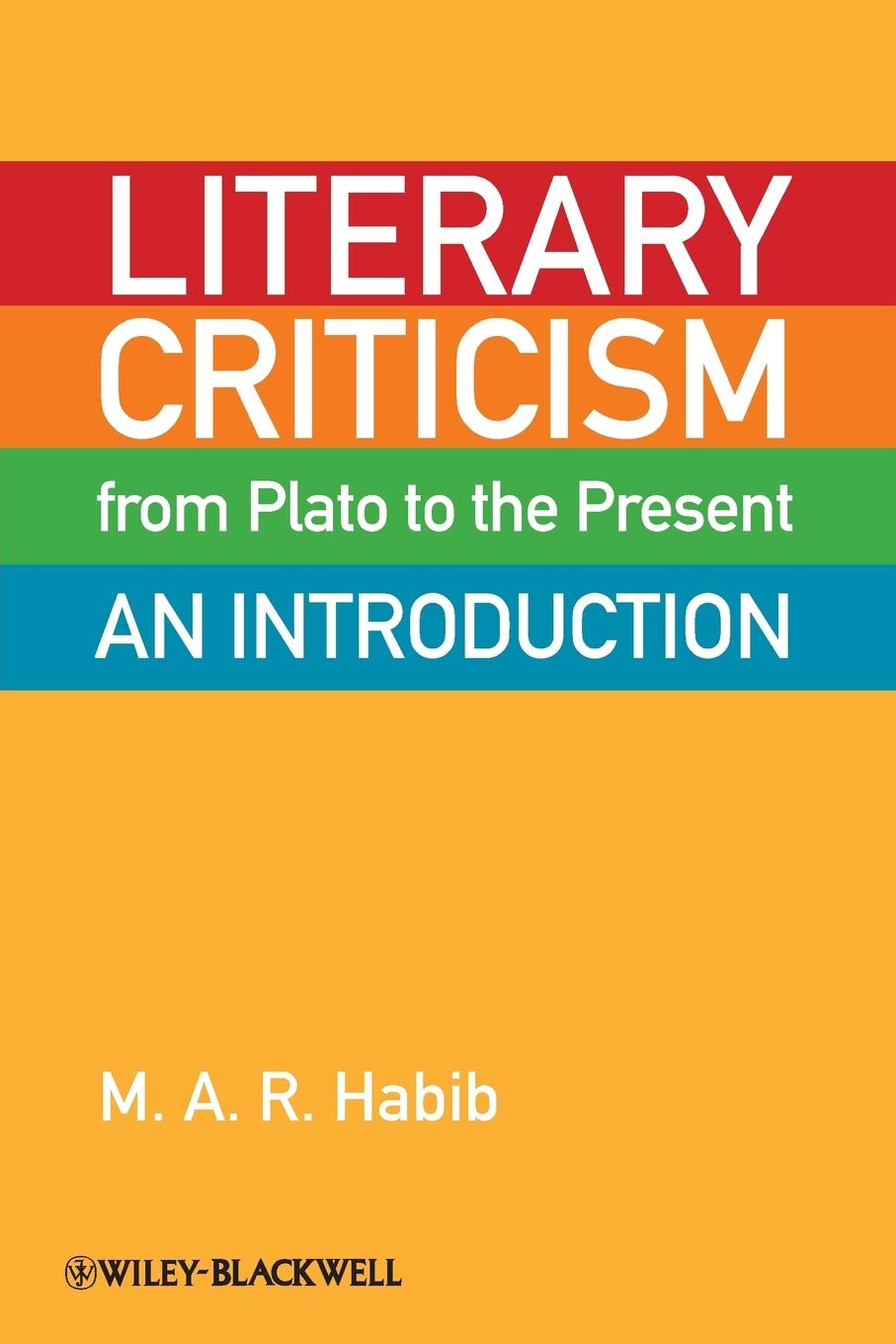
Literary Criticism from Plato to the Present: An Introduction. Wiley-Blackwell, 2010.
Reviews:
“Habib aims to offer a concise, authoritative overview of literary criticism and theory in the West via an in-depth examination of its key movements, figures and texts.”
―Times Higher Education Supplement, 24 February 2011
“Rafey Habib’s book carves out a distinctive niche in this lately much-discussed but still strikingly eventful and rewarding history of thought.”
―Christopher Norris, Cardiff University
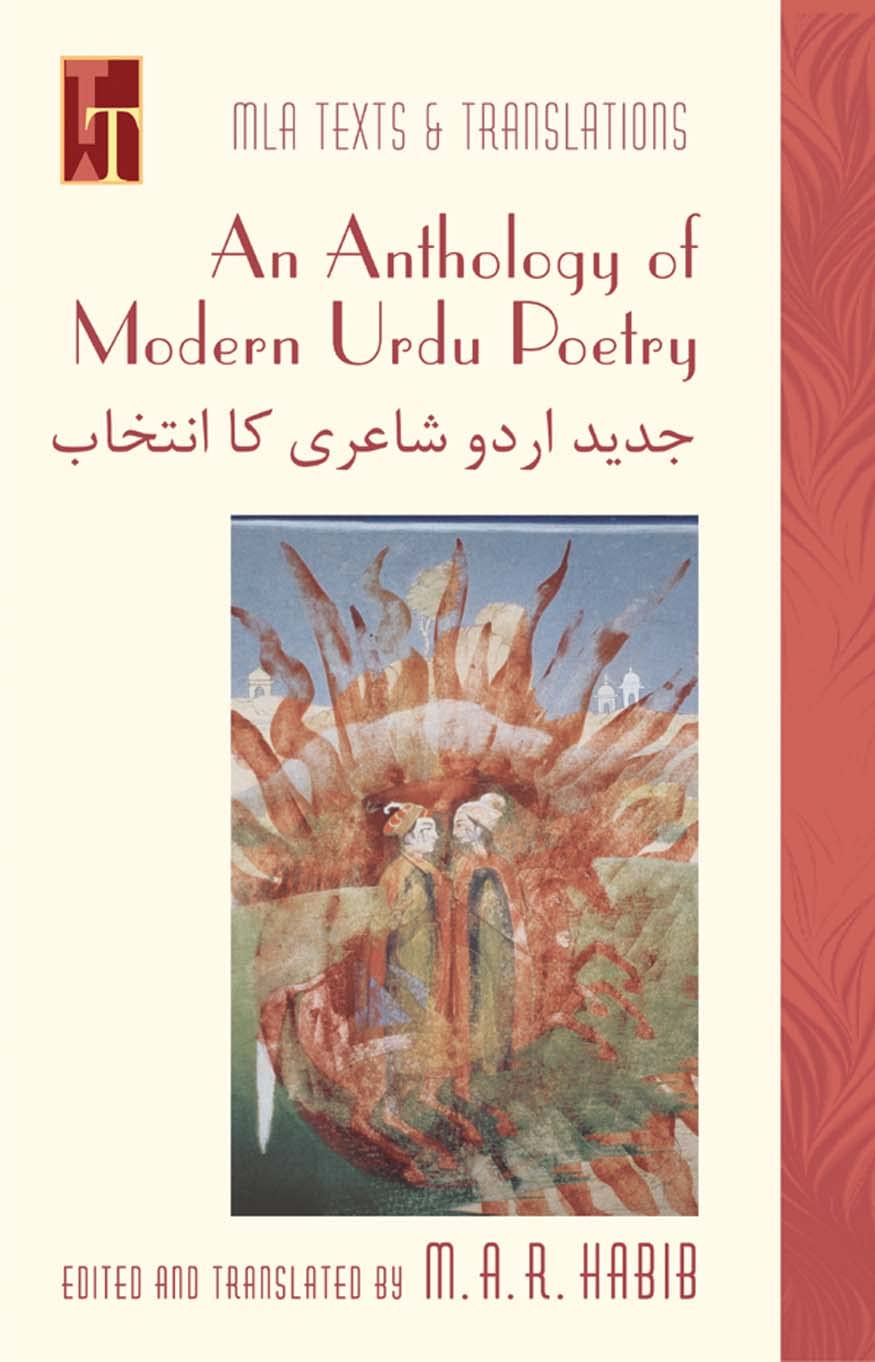
An Anthology of Modern Urdu Poetry in Translation. Modern Language Association. 2003.
Reviews:
The next time I teach a course in the translated modern literature of the subcontinent, Habib’s volume will be on the required reading list. I consider his the best collection of Urdu poetry in English translation, period.”
―K. E. Bryant, University of British Columbia
The Penguin Dictionary of Literary Terms and Literary Theory, [originally ed. J.A. Cuddon]. Penguin. 2014.
Reviews:
‘An indispensable work of reference’
―Times Literary Supplement
The Penguin Dictionary of Literary Terms and Literary Theory is firmly established as a key work of reference in the complex and varied field of literary criticism. Now in its fifth edition, it remains the most comprehensive and accessible work of its kind, and is invaluable for students, teachers and general readers alike.
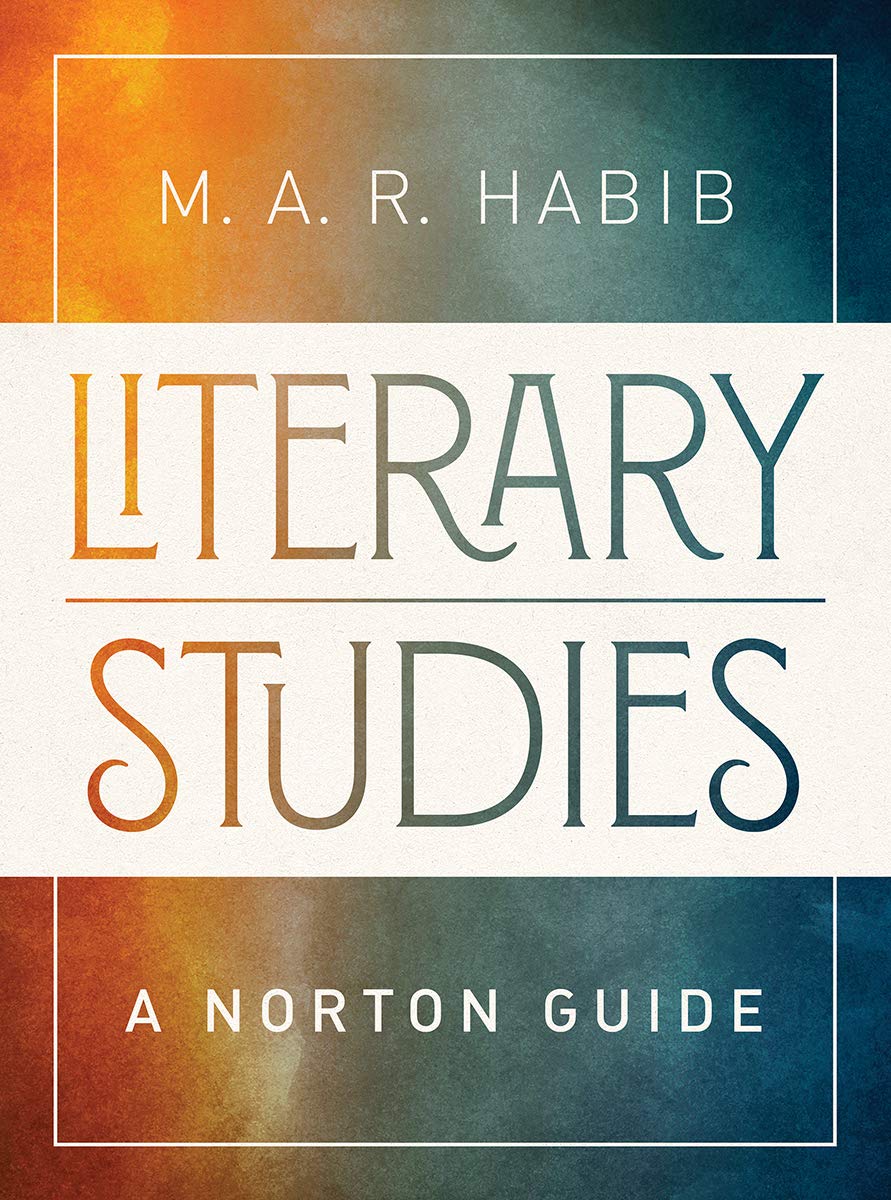
Literary Studies: A Norton Guide. W.W. Norton, 2020.
Literary Studies provides students with an accessible overview of everything they need to know to succeed in their English courses―literary terms, historical periods, theoretical approaches, and more. The guide helps students gain the analytical skills that will benefit them in college and as educated citizens after graduation.
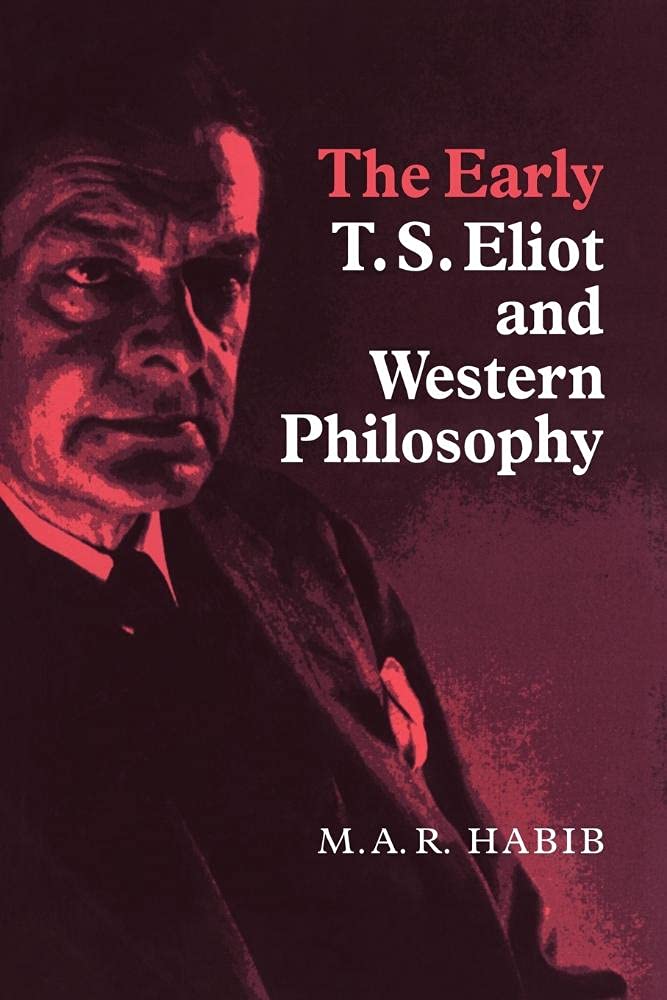
The Early T.S. Eliot and Western Philosophy. Cambridge University Press,
1999.
This book offers a comprehensive study of Eliot’s philosophical writings and attempts to assess their impact on both his early poetry through ‘The Waste Land’ and the central concepts of his literary criticism. Habib presents the first scholarly analysis of Eliot’s difficult unpublished papers on Kant and Bergson, and establishes the nature of Eliot’s connections with major figures in the Western philosophical tradition, including Plato, Aristotle, Locke, Hume, Hegel, Schopenhauer, Nietzsche, Bradley and Russell. The Early T. S. Eliot and Western Philosophy attempts to unravel the complex notions of irony underlying Eliot’s poetry, arguing that these originate in his philosophical thinking and achieve persistent expression in his early aesthetics. This book offers close readings of Eliot’s major poems and critical essays, shedding valuable light on his views on language, tradition, impersonality and emotion, and situating these in a broad aesthetic and philosophical context.
The Dissident Voice: Poems of N.M. Rashed: Translated from the Urdu. Oxford University Press, 1991. [A translation, for the first time into English, of the four volumes of poetry written by a major modern Urdu poet, with detailed critical introduction].