
Critical Methods in English
The reading and interpretation of literature involves a rich and broad range of strategies and perspectives. How we read a text depends on many factors: our level of literacy, our knowledge of history, literary tradition; our gender and social class; our access to the author’s personal biography as well as her intellectual, economic and ideological circumstances. This course is designed to foster the student’s ability to undertake close and critical readings of literary texts, while situating these texts in their broader social and intellectual contexts. We will undertake close analyses of poetry, fiction, drama, and prose from a variety of literary-critical perspectives. This process will entail learning how to write about literary texts and how to conduct research using the library and other resources.
Post-Colonial Literature and Theory: Issues in “World Literature”
Many parts of the world – such as parts of Africa, the Middle East, the Indian subcontinent, Canada and Ireland — have until recently been subjected to imperial subjugation on political, economic and cultural levels. Many of these nations and areas have attained political independence. Both during and after their struggles for independence, they have produced rich bodies of literature reflecting the political, cultural and psychological dilemmas of their peoples.
This course will focus on modern literary works from the Middle East, the Indian subcontinent and Africa. It will situate those works in a historical context centred on the transition from colonialism to postcolonialism. A few theories of colonialism, offered by writers such as Marx, Frantz Fanon, Edward Said, Gayatri Spivak, Homi Bhabha and Aijaz Ahmed, will help in identifying the major themes of postcolonial writing, which include ethnocentrism, nationalism, the formation of subjectivity, gender, exile, hybridity, migration and the nature of cultural domination. Writers to be studied will include Farough Farokhzad, Fatima Mernissi, Naguib Mahfouz, Khushwant Singh, Monica Ali, Arundhati Roy, Nadine Gordimer and Derek Walcott.
Modern Literature and Theory
A culturally diverse study of major trends in modern literatures. We will read poems and short stories in the Western tradition, including works by T.S. Eliot, Virginia Woolf, and Borges, as well as feminists from Eastern traditions (Fatima Mernissi), and works by so-called “postcolonial” and postmodern authors in African and Arab traditions and those of the Indian subcontinent. We will look at these writers in their literary and social contexts to see what light they can throw on some of the dilemmas – of racism, sexism, ethnocentrism, and imperialism – facing our world today.
Literary Criticism and Theory
What is involved in the interpretation of literature? Should we just focus on the “words on the page” and on purely formal aesthetic attributes or should we take into account the author’s biography, social class, psychology, and audience? What is the purpose of literature? Moral? Political? Simply pleasure? What ideological assumptions do we bring to the study of literature? As we shall see in this course, these are some of the questions posed by the greatest Western thinkers from Plato and Aristotle through Hegel and Marx; and they have been raised in more modern contexts by critics working from the perspectives of Psychoanalysis, Gender Studies, Deconstruction, Postcolonialism, Global Studies, Posthumanism, Critical Race Theory, the “New” Materialism, and Digital/Media Studies.
Reading Freud
Freud’s influence on twentieth century thought and culture has been enormous. In this course we will study some of the major and fascinating texts of Freud, such as his essays on the interpretation of dreams, sexuality, the structure of the mind and mental development (including the Oedipus complex), the unconscious, the reality/pleasure principles, and on the creative process in literature. We will also review some of his famous case-studies on hysteria and neurosis as well as more general works on civilization and broad issues such as religion. A number of themes will guide our study: (1) Freud’s relation to literature, his methods of literary analysis and his use of literary techniques in constructing psychoanalytic narratives; (2) the “scientific” status and method of Freud’s investigation of the mind; and (3) Freud’s assessment of religion and the progress of civilization. In general, this course will provide a thorough grasp of one of the most important thinkers of the modern Western world.
Virginia Woolf and Feminism
Was Virginia Woolf a feminist, or merely the elitist daughter of a minor philosopher, or both? Why do some feminist theorists see her as an early champion while others reject her, as an early betrayer of their cause? What lay behind Woolf’s ambivalent attitude to her father? What were Woolf’s philosophical assumptions? Was she truly influenced by the realism of G.E. Moore and Bertrand Russell? If so, how can we reconcile this with her “modernism”? Where does Woolf stand politically? Do her non-fiction prose writings contradict the assumptions underlying her novelistic techniques? These are some of the questions we will confront as we look at To the Lighthouse, Orlando, A Room of One’s Own, Three Guineas and other texts.
Modern British Poetry
An in-depth study of poetic developments in Britain from the late nineteenth century to the present day. Beginning with the first world war poets and Yeats, we will then confront the modernists such as Eliot and Mina Loy, the thirties’ poets including Auden and Macneice, poets of the Second World War such as Dylan Thomas, poets of the 1950s “Movement,” such as Larkin and Gunn, poets of the 1970s such as Ted Hughes, the Irish poets Heaney and Boland, and the ex-colonial writers Grace Nichols and Moniza Alvi. We will place emphasis on the intellectual and social contexts of the work of these writers, as well as the poetic forms they employ.
Yeats, Eliot, and Pound
An in-depth study of the poetry and aesthetics of Eliot, Yeats and Pound in their social, religious and political contexts. We will consider the major factors and figures which influenced the three writers; their relations with one another; their position in the overall movements of modernism; the main themes, form and development of their poetry; their aesthetic principles; and the possible determination of the nature of their work by their political predispositions.
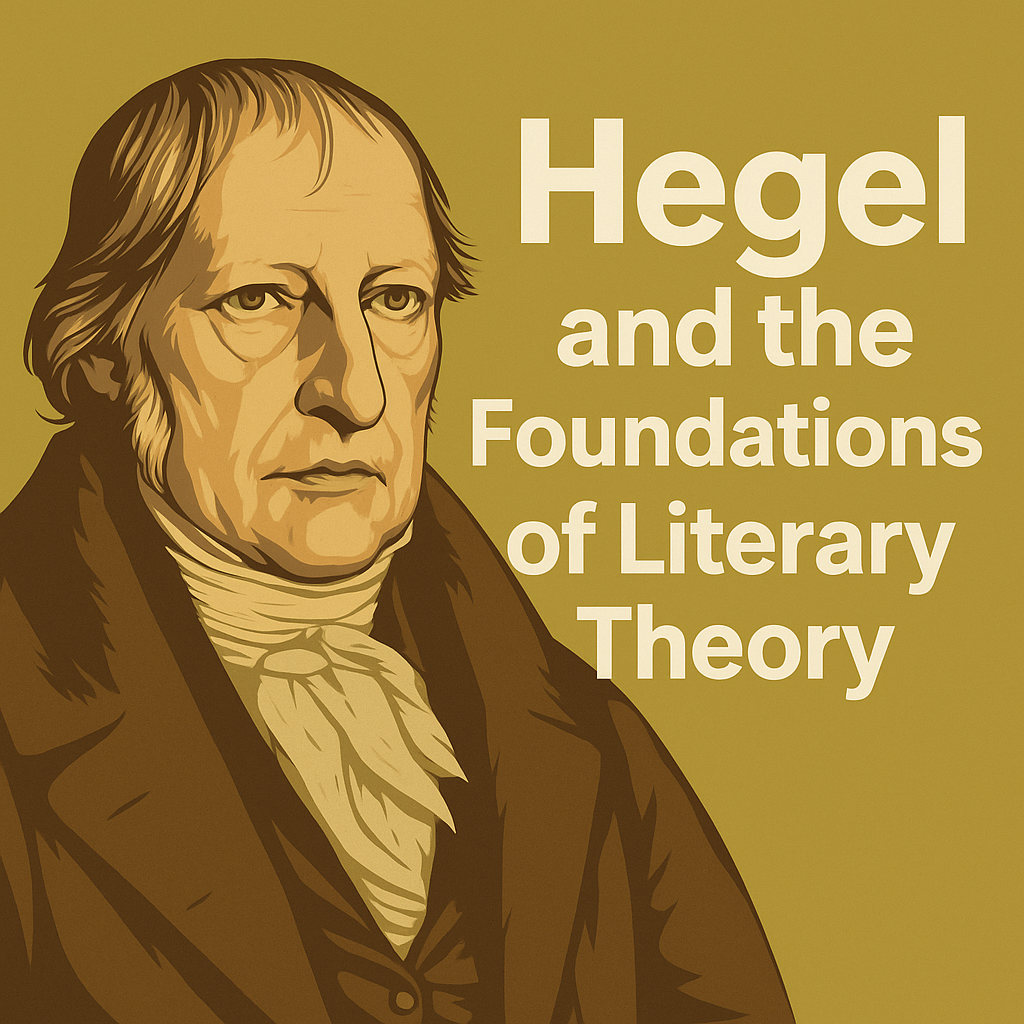
Hegel and the Foundations of Literary Theory
This course explores how Hegel’s philosophy—especially his dialectical method, concepts of identity and difference, and theories of art, subjectivity, and history—forms the intellectual groundwork for the major movements of modern literary theory. Beginning with a close study of Hegel’s Logic and Phenomenology, the course examines how Marxism, the Frankfurt School, structuralism, deconstruction, psychoanalysis, feminism, gender theory, media and postmodern theory, race theory, and postcolonialism all emerge from, respond to, or contest Hegelian ideas. Through readings from Marx, Adorno, Derrida, Saussure, Freud, Lacan, Deleuze and Guattari, Butler, Fanon, Said, Lyotard, McLuhan, Žižek, and others, students trace the pervasive influence of Hegel across modern thought while critically assessing challenges to his dialectic from feminist, poststructuralist, existentialist, postcolonial, theological, and globalization-oriented perspectives, ultimately gaining a unified understanding of how Hegel’s legacy structures contemporary approaches to literature, culture, and critical theory.
Modern World Poetry
A culturally diverse study of major trends in modern poetry. We will read poems in the Western tradition, including works by T.S. Eliot, Ezra Pound, and Auden, Sylvia Plath and Audre Lourde, as well as feminists from Eastern traditions (Fatima Mernissi), and works by so-called “postcolonial” and postmodern authors in African and Arab traditions and those of the Indian subcontinent. We will look at these writers in their literary and social contexts to see what light they can throw on some of the dilemmas – of racism, sexism, ethnocentrism, and imperialism – facing our world today.
Studies in Dramatic Form
Much modern drama raises issues which deeply concern us today: violence, sexuality, the possibility of religious belief, and disillusionment with politics. In this course we will consider the development of various forms of Modern British Drama, in the light of such questions as: how do these forms express the social issues of their time? How do they articulate the notions of ideology religion and gender? How do they depict class conflicts? Does the form of a play reside in the written text or in a stage production? Some of the plays we study are deliberately designed to shock their audiences: does the stage offer drama political possibilities which are denied to other genres? To answer these questions we will delve into English history and various modern critical approaches such as Feminism and Marxism; we will also view stage/film productions of some of our texts.
Islamic History and Literature
What were the origins of Islam? Is this religion intrinsically opposed to the main currents of modern liberal-bourgeois Western thinking, as is often claimed? What kind of person was the prophet of Islam? What has been the status of women in Islamic culture? Of Jews and Christians? What are the true meanings of jihad? What kinds of connections subsist between the literature and philosophy of Islam and the categories of Mediaeval European thought? These are some of the questions that have been ushered into prominence by recent events on the stage of international politics.
This course offers a comprehensive survey of Islamic history, thought, and literature from the origins of Islam to the modern period, beginning with an introduction to the religious, social, and cultural milieu in which Islam emerged and continuing with an in-depth study of foundational Arabic texts, including the Qur’an, Hadith, early biography, classical poetry, theology, philosophy, and Sufism. It then explores major historical, sociological, and travel writings before turning to the rich literary traditions of Persia—featuring Firdausi, Attar, Rumi, Sa‘di, and Hafez—and Urdu, including Abu’l-Fazl, Ghalib, and Muhammad Iqbal. The course concludes with a unit on critical perspectives, examining Orientalist, feminist, deconstructive, modernist, and sociological analyses of Islam, alongside reflections on Islam’s relationship to Western thought, culture, and institutions, providing students with both a broad literary-historical foundation and a set of contemporary interpretive frameworks.
Evolution of Islamic Law
Over the last few decades there has been much debate concerning the Islamic institution of shari’ah, which is the formal name for Islamic law. Shari’ah literally means “path” or “way”. The shari’ah embodies a systematization of the path of conduct ordained by God for Muslims. It was formulated essentially during the eighth and ninth centuries A.D. and was originally conceived as regulating all aspects of a Muslim’s life: not only her relationships with the state and other individuals but also her obligations to God and her own conscience. Its scope extends over ethical and religious duties, the laws of marriage, divorce and inheritance, as well as the entire field of criminal law.
Recently, topics of debate have included questions such as: the compatibility of shari’ah with liberal ideologies and institutions; the rights of non-Muslims in an Islamic state; the political implications of shari’ah; the degree of consensus between the four schools of Islamic law; and, above all, the possibility and validity of re-opening the doors of legal and theological interpretation in Islam. This course will offer an overview of the historical formation and development of shari’ah, of the debates which led to its solidification in the tenth century, and of the various aspects of shari’ah which are of current concern in the Islamic world.
Literatures of Islam, Judaism, And Christianity: The Teaching of Religion in the Camden Area (Experiential learning course)
This is a course which situates academic learning within a broader framework of Civic Engagement, and integrates it with experiential learning and service to the local community in and around the Camden area. The course involves learning the basic doctrines and practices of Islam, Judaism, and Christianity, and then going into the local community – to High Schools, Churches, Mosques, Synagogues and various religious centers in order to conduct research as to how religion is taught in these institutions.
Political Readings of Shakespeare
This course aims to encourage a close reading of a selection of Shakespeare’s plays from perspectives which challenge the underlying assumptions of the liberal-humanist tradition of Shakespearean interpretation. This tradition centers on the analysis of character, based on Christian/Aristotelian/Humanist definitions of human identity and morality. It has also effectively treated Shakespeare’s texts as autonomous and timeless entities, thereby depoliticizing them. Our concern will be to attempt to repoliticize Shakespeare by reading the said plays from perspectives which include those of: Marxism, Historicism, Feminism, Deconstruction and Structuralism.
Politics and Literature
The politics of the modern world can be divided broadly into allegiance with or reaction against the ideals of the Enlightenment and the French Revolution of 1789. This course will consider the major representatives of these conflicting attitudes and the differences between their conceptions of literature. Our inquiries will include such questions as: Are Marxist thought and criticism still possible after the collapse of the Berlin Wall? Can they still aspire to political, ethical or literary relevance? Or is the victory of bourgeois thought now complete? What can a Marxist reading add to more conventional ways of understanding literature? What are the connections between Marxism and the traditions of humanistic bourgeois thought — rationalism, empiricism, utilitarianism, pragmatism — which, since their birth in the Enlightenment, continue to shape our world? Is it possible to reconcile Marxism and the more fashionable modes of literary criticism such as deconstruction, reader-response theory and historicism? Is Literary Theory a continuation of the bourgeois tradition or a reaction against it? What would a Marxist reading of a T.V. programme or advertisement look like? We will survey the approaches to literature of major thinkers from the Enlightenment to the present day, applying some of these approaches to specific literary texts.
Intellectual Heritage: Modern Work Ethics: History, Ideology, Theory
In this class we will study a broad range of ideas about work from the eighteenth century to the present. These ideas have been generated by thinkers in various disciplines such as philosophy, science, economics, political theory and literature. We will consider the broad historical contexts of various conceptions of work and will address questions such as: What are the historical connections between various definitions of work? How does work define our social status and our personal identity? What is the relative value of different kinds of work? How have differences of gender, race, religion and class shaped our notions of work?
Literatures in English I
A survey, within their historical contexts, of some of the renowned texts of English literature from the Middle Ages through the eighteenth century.
Literatures in English II
A survey, within their historical contexts, of some of the renowned texts of English and American literature from 1660 to 1900.
Literatures in English III
A survey of literatures written in English in the twentieth century by authors from around the world, including Britain, America, Asia and Africa. These texts will be studied in their historical contexts, with due emphasis upon their interrelations.